
Roo Station / UNIT 04 RO04
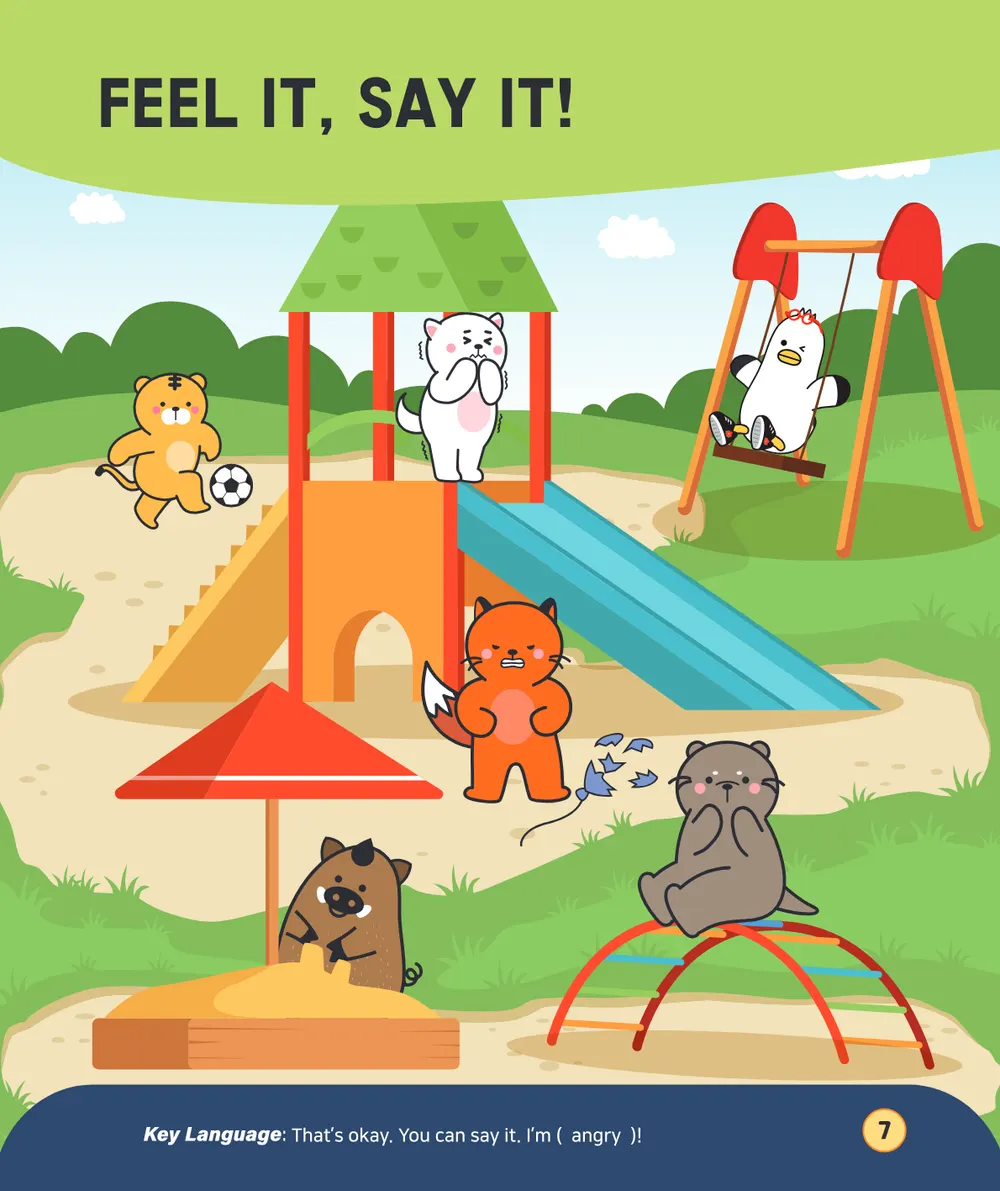
Feel It, Say It!
That's okay. You can say it.
 LESSON 2
LET’S GET STARTED
Story Review and Skills
Follow the shared lesson flow, with room to repeat, pause and play.
Start presentation Slides, audio and teaching notes in one place.Your lesson flow
Week 1 · Day 2- 01Routine
Hello & warm-up
Greetings, feelings, weather and the day.
- 02SB
story time; review the story in full & check comprehension
Student Book · p. 10–21
- 03SB
skills
Student Book · p. 22
- 04WB
check & stickers
Workbook · p. 5–6
SING · MOVE · PLAY
A little more play
Built into your lesson. Repeat or skip to suit your class; keep time for the book and conversation.
More official songs & online games
Preview external pages before class. They open in a new tab and may need internet or show provider content.
- Walking Walking · movement song ↗Use before seated book work. Model actions in place.
- Starfall ABCs · letter exploration ↗Choose the lesson’s letter with your class. Best after introducing its sound.
- British Council · word games ↗Select the topic first; reading tasks need teacher help for beginners.
Our games add oral practice to the curriculum. They do not measure a child’s English level.
Teaching guide
Original Teacher’s Guide. Each 40-minute lesson covers two guide periods.
2. Story Review and Skills
W1 P3Story Review
Lesson Goals
- Review the story
- Review vocabulary
Students will be able to
- Check story comprehension
- Check vocabulary comprehension
- Quiz students’ knowledge
1. Warm-Up
Hello Song · “How are you?” · “How’s the weather today?” · Day of the week check
1. Warm-Up
- Let’s Chant song (Student book pg. 9).
3. Student book pg 8
- Review target vocabulary through actions and explanations.
4. Story Review
- a) “Let’s look at the story again and remember what happened.”
- b) Open the Student Book to page 10 and go through each page until page 21.
- c) For each page, ask key questions related to the pictures and events: “How does Roo feel?” (Roo is angry.) “How does Tigo feel?” (Tigo feels scared.) “Why does Jindo have butterflies in their stomach?” (Because Jindo is nervous.)
- d) Ask general questions about the friends’ trip to the park: “How do you feel today?” “What makes you happy?”
5. Story reenactment
- a) Assign characters to different students (give everyone a chance) and physically act out the story. Have lots of enthusiasm and encourage the students to be enthusiastic and have fun.
- b) Have the students who are not acting out the story be Boogi.
8. Wrap up with the Chant on Student book pg. 9
- a) Relate each sentence to the story.
- b) Have the students stand up while singing and encourage them to move their bodies.
W1 P4Workbook (Story) + Story Book (Skills)
Lesson Goals
- Complete workbook pages
- Complete storybook skills pages
Students will be able to
- Check story comprehension
- Check vocabulary comprehension
- Quiz students’ knowledge
1. Warm-Up
Hello Song · “How are you?” · “How’s the weather today?” · Day of the week check
1. WB pg 6 — Sticker activity
- a) Look at the text and picture and stick Boogi showing an X sign or a thumbs up.
- b) Explain to the students what each sticker signifies.
2. Draw what comes next (Student book pg. 22)
- a) Go to student book pg. 22 and explain how to do the puzzle.
- b) Work with students to complete the puzzle.
- c) Color the drawn animal to match.
- d) Ask the students about the puzzle, such as “Who is this?”
3. Charades game
- a) Make sure every student has completed their puzzle page. Review the feelings listed in the vocabulary with the whole class. The teacher points to Roo on fire, acts it out with an exaggerated angry face, and asks “How do I feel?” Students reply: “You are angry.” Practice this a few times together so students understand.
- b) Introduce the game: the teacher chooses one feeling (e.g. angry). When you have shown the action to the students, they act it out like the teacher did.
- c) Play the game: have students take turns performing and answering.
- d) Finish the game by reviewing the feelings again as a class. Ask simple comprehension questions: “What does anger look like?” “What does being nervous look like?” Praise the students for following directions and speaking English.